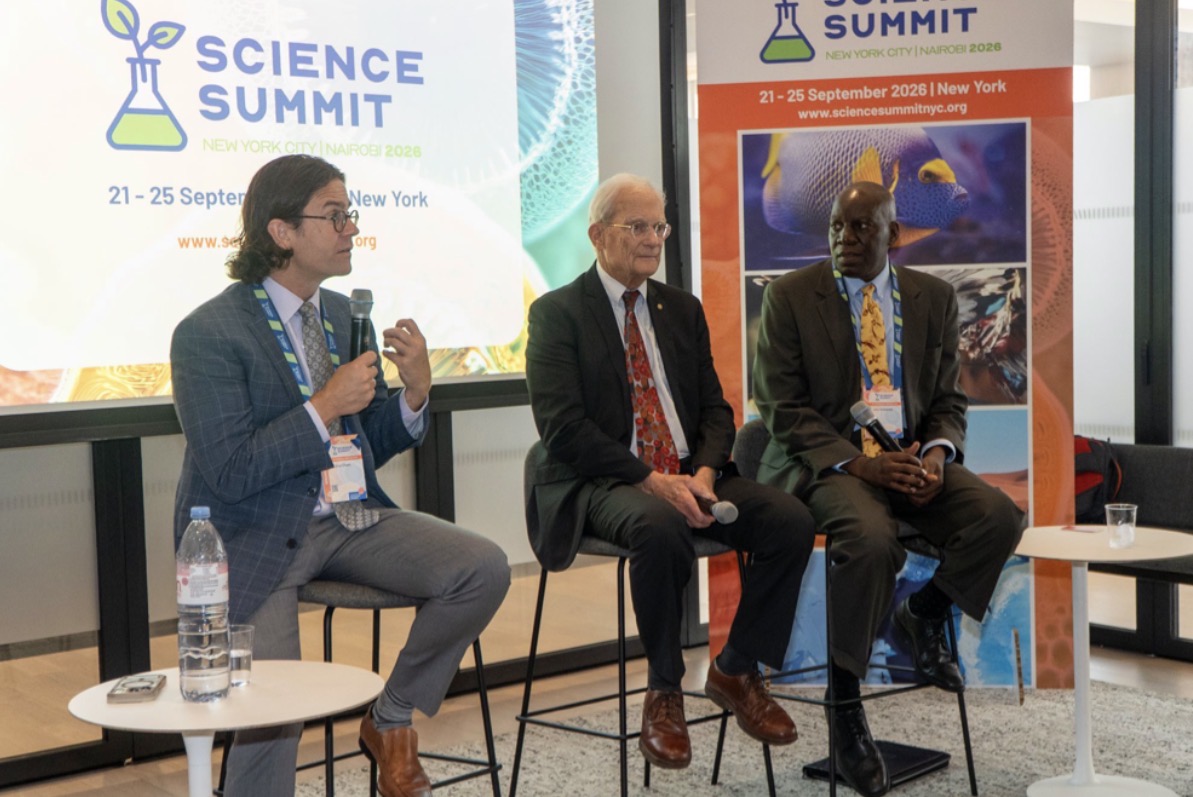
Dr. Cyrus P. Olsen III, a theology professor at the University of Scranton, spoke at the United Nations’ science summit in late September to discuss how spirituality affects what people consider when seeking medical help.
Dr. Olsen set out to help the policy makers understand the gaps in global health metrics using the research he has conducted in Uganda with Harvard's Dhand lab. Previous methods such as the Dhand labs’ Personal Social Network Tool, or PERSNET, sought to map out the web of relationships around a patient to gauge how their social environment impacts their health outcomes.
What the PERSNET did not take into account was how spirituality and religion can
affect the way in which patients seek help.
Dr. Olsen said, “[People] will talk about God, or talk about prayer, or talk about other things that aren't recorded ... Those kinds of things are part of people's lives that need to be part of the network survey.”
In Uganda, Dr. Olsen's team studied patients who were at a high risk of having a stroke. The Dhand lab wanted to test primarily how “Kin, ancestors and spirits shape care-seeking.” Dr. Olsen’s team found that in 64 interviews about factors in decision making, prayer was mentioned 249 times. Other factors named include bewitchment 51 times, scripture 40 times, curse and baptism 18 times, and sacrifice 17 times. These findings demonstrate the necessity of acknowledging spirituality in global healthcare.
When it comes to taking into account different cultural perspectives, Dr. Olsen and his team adopted the philosophy of Charles Taylor. In his book, “A Secular Age,” Charles Taylor discusses how the Western world has transitioned away from a worldview in which the boundary between the self and the external world is permeable. This old worldview is referred to as “porous.”
Individuals in modern Western culture no longer see themselves as open to outside forces, such as spirits. Instead, they maintain a “buffered” world view where their minds are distinct, self contained units. When standard healthcare tools, such as PERSNET, assume a buffered worldview, they may be less accurate in measuring porous individuals.
Understanding different cultures and needs is an essential aspect of installing global
policies. This is why the United Nations has been transitioning from a trickle down approach, where Western policy makers dictate strategies from above, to a ground up approach, starting in local communities.
Dr. Olsen emphasizes the role of listening both in policy making, and in building
relationships in places like Uganda. He first learned this method on a trip to El Salvador with the University's campus ministry in 2013.
Dr. Olsen said, “We weren't doing any kind of white saviorism, we were requested not to do anything, we just had to listen.” During this trip they listened to the mothers of disappeared children who tried to migrate North and disappeared.
“We wept together, we learned these stories, we talked to each other, and then we were told to come back and keep that story telling going by listening and learning,” Olsen explained.
Theology can serve as a sensitizing tool to hone listening skills. While some people may dismiss the study of theology in scientific settings, it is essential to understanding how people make decisions. If an individual consults the church or prays before getting help it can be detrimental to their health depending on the circumstances.
“If it's a stroke, you need help fast, so this is one of the concerns we have with brain
health. If you don't get help fast, you lose neurons faster and you're in danger of death” Dr. Olsen reports.
In order to function properly the U.N. must listen to people from all over the world and from various fields of expertise. Dr. Olsen's research resonated so strongly with the UN that they invited him to come back the next day and present to a larger audience.