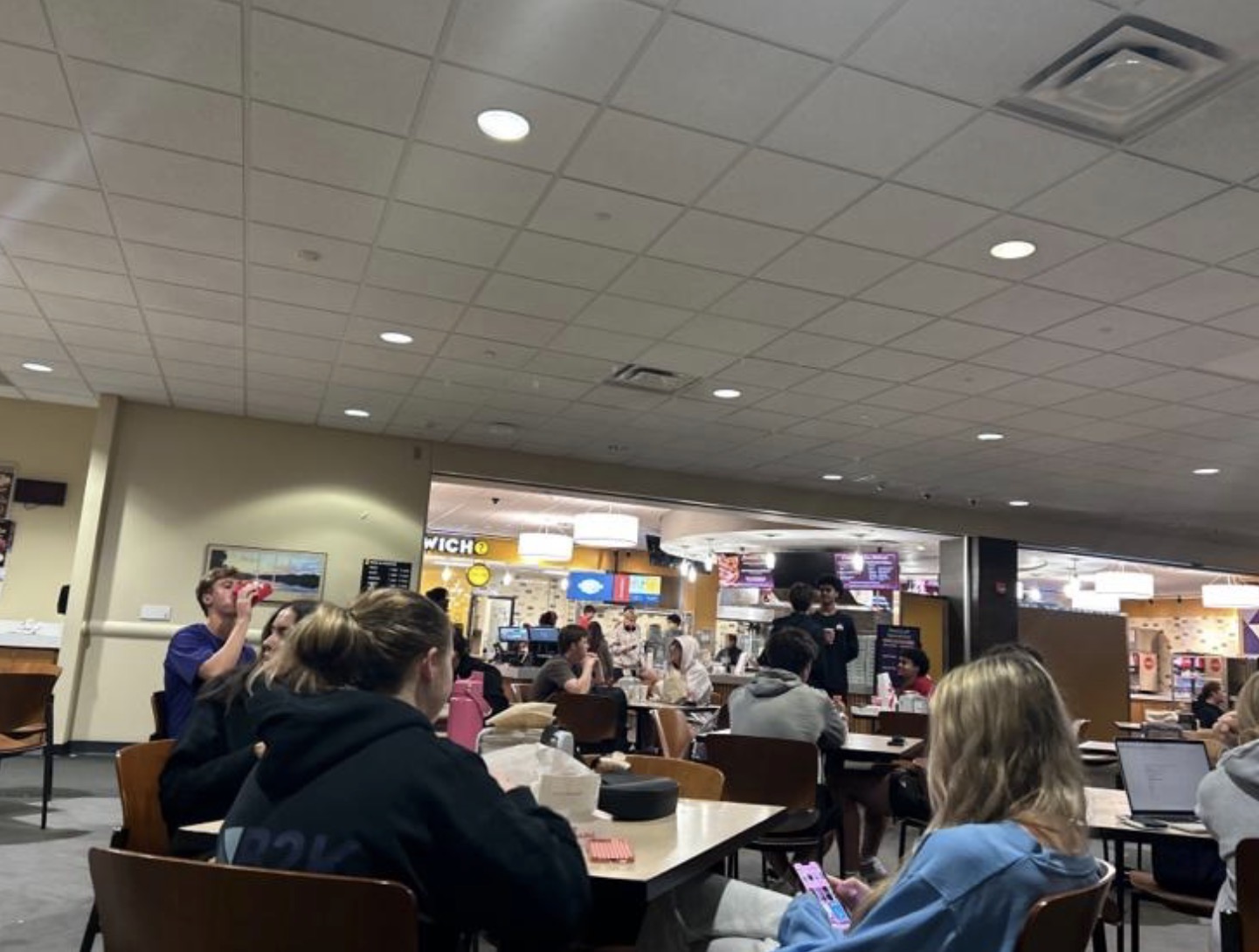
SCRANTON, Pa. — As upperclassmen are getting deeper into the fall semester, many are finding that the meal plans they signed up for aren’t what they expected, while others are discovering new ways to feed themselves without a meal plan.
Angela Rivera, a junior human resources major from the Bronx, New York, has opted out of a meal plan despite living close to the dining hall.
“The meal plan was too expensive, and from last year’s experience, I learned there wasn’t good food all the time,” Rivera said.
According to "Choose A Meal Plan," upperclassmen who live on or off campus can choose from six meal plan options.
The 10 Plan allows students to have 10 meal swipes per week and $260 in Flex. The 10 Plus Plan offers 10 meal swipes per week and $360 in Flex. According to “Navigating Student Meals” by Christina Brannon, the 10 Plan is great for students who want the choice of shopping for food.
The 14 Plan offers students 14 meal swipes per week and $180 in Flex. The 14 Plus Plan offers 14 meal swipes per week and $280 in Flex.
Finally, the Ultimate Plan provides unlimited meals for the semester, as well as $70 in Flex. The Ultimate Plus Plan includes unlimited meals and $170 in Flex. Brannon wrote that the Ultimate Plan is ideal for students who don’t want to worry about grocery shopping or food preparation.
Brannon also wrote that meal plans automatically renew for the spring semester every year, so students don’t need to sign up for a new meal plan in the spring. Unused Flex money rolls over to the new semester.
The meal plans range in price from $2,638 to $3,914 per semester.
According to “Paying for Meals at College: What to Know About Costs” by Sarah Wood, the Free Application for Federal Student Aid, or FAFSA, can help cover dining costs.
“These fees can be significantly reduced or covered under financial aid,” Wood wrote.
Wood also wrote that students should consider factors such as their sleep habits and class schedule when choosing a meal plan.
“Students who wake up early or spend the majority of the day on campus could require more meals than those who sleep in late,” Wood wrote.
Instead of a meal plan, Rivera has invested in HelloFresh, which delivers weekly meal kits to her mailbox. Rivera said each box comes with all the ingredients, instructions and seasonings she needs to prepare her meals. She pays $70 to $80 per week for the meal kits.
“I get to choose every day what I want to eat, and I don’t have to wait in line for it,” Rivera said.
On the other hand, Kerri Morgan, a junior occupational therapy major from Carle Place, New York, still has a meal plan despite living off campus. Morgan said she kept the meal plan because she didn’t want to cook during the week. In her article, Wood also wrote that the convenience of dining halls can be a major draw for students.
“A meal plan offers a fast-dining solution for students who want to avoid cooking or buying groceries,” Wood wrote.
On weekends, Morgan has other plans.
“Mac and cheese and cereal,” Morgan said.
Morgan buys groceries for the weekends instead of using her meal plan, but she said she doesn’t regret having a meal plan on campus.
According to “Meal Plans 101,” students can change their meal plan through the MyScranton portal up until the last add/drop date of the semester.
Aramark, the University of Scranton’s food service provider, did not respond to requests for comment.