SCRANTON, Pa. — Many students at the University of Scranton anticipated the return of Nobu sushi on Sept. 14, but when the day finally arrived, the experience was far from what they remembered.
Nobu sushi visits campus every Monday and Wednesday to offer made-to-order sushi rolls and a popular alternative to regular dining options. In previous years, the sushi station was located on the first floor of the DeNaples Center. Students could walk up, watch their food being prepared and wait in a line to receive their sushi.
This semester, university dining officials relocated the station to the first floor of the Loyola Science Center (LSC). According to Joe Boyd, the general manager of university dining who has been with the university for 34 years, the move was a deliberate, strategic choice.
"In partnership with the university, we evaluated the space on campus to best serve students without having to close existing locations," Boyd explained.
Along with the physical move came a complete shift in operations: the physical line was replaced with a digital ordering system. Students are now required to place all sushi orders exclusively through the University of Scranton Dining mobile app.
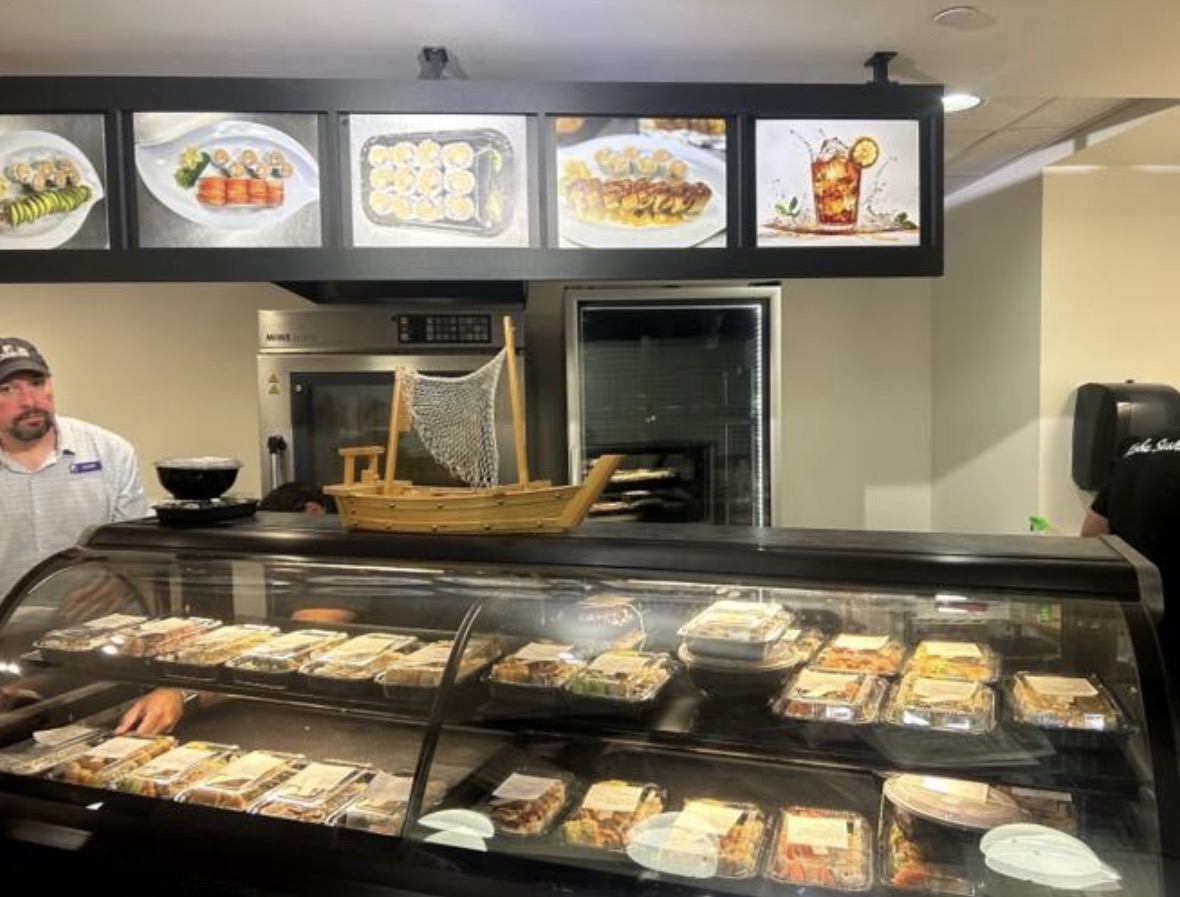
On the first floor of the Loyola Science Center, sushi orders fill the display case at the new Nobu Sushi location. While the new system was intended to modernize campus dining and streamline traffic, some students reported longer-than-expected waits when service began Sept. 14, sparking widespread debate across campus.
Kara Malloy, a junior counseling and human services major, was among those left frustrated by the first sushi Monday of the semester.
“I waited three and a half hours,” Malloy said. “The process itself was easier in theory, but it didn’t matter because it still took triple the amount of time it would’ve.”
Not all feedback was negative, however. Some students found value in the mobile ordering option rather than standing around in a crowded line. Elizabeth Haney, a junior media production and journalism major, noted that the online system allowed her to manage her afternoon schedule more efficiently.
“It was easier, I think, because when I order online, I have time to get other things done like going to the gym or studying, rather than just standing in line,” Haney said.
Despite the initial friction, dining management views the expansion as a step forward for campus dining.
"We always consider it a success when we can add offerings to our locations that our students have told us they wanted, like our sushi," Boyd said. "We have heard some positive feedback over the first few weeks of the semester, and we will keep monitoring student behaviors and feedback."
According to campus dining guidelines, mobile ordering opens promptly at 5 p.m. on Mondays and Wednesdays. However, the system’s design created unexpected hurdles. When hundreds of hungry students access the app simultaneously at 5 p.m., tickets flood the kitchen printers, creating an immediate backlog that staff struggle to clear for hours.
Lengthy wait times are not the only issue fueling student dissatisfaction; changes to pricing have also been a major topic of conversation across campus. In previous semesters, Sushi Monday operated as a meal deal, allowing students to use a single meal swipe for a freshly made roll and a small fountain drink. Under the updated system, the combo has been discontinued, beverage options are sold separately, and individual roll prices have increased.
“The prices were raised, and it’s not even a combo anymore, so the drink doesn’t come with it,” Malloy said. “It's $13 for a roll. Crazy.”
Addressing the price shifts, Boyd cited broader economic trends as well as menu enhancements as the primary drivers behind the cost structure.
"Like many people and restaurants, we have also experienced increases in the cost of ingredients, which has resulted in some pricing adjustments," Boyd said. "We’ve also expanded our offerings to include a premium sushi selection, giving guests more variety and additional options to choose from."
The prices hit upperclassmen particularly hard, as many live off-campus and do not have meal plans, compared to first-year students. According to official campus dining information, a standard dinner meal swipe is valued at $8.10. With individual sushi rolls priced significantly higher, students must cover the remaining balance out of pocket using Flex Dollars or personal funds, costing anywhere from $3.40 to $4.90 extra per order.
To help mitigate high demand and ease crowding on any single evening, dining services expanded the sushi operation to two days a week, offering service on both Mondays and Wednesdays.
"Offering sushi on both Monday and Wednesday should help distribute demand more evenly throughout the week by giving students an additional opportunity to purchase it," Boyd noted. "While many students who enjoy sushi may continue to order on both days, the added service day is expected to reduce some of the concentration of demand on a single day and provide greater flexibility and convenience for students."
As the student body adjusts to the new location and mobile ordering system, many have offered suggestions for both peers and the Nobu staff.
“I wouldn’t let people order before 5 p.m.,” Haney said. “People told me that they sent their order in at noon, and I was shocked that mine was ready before theirs.”
Malloy suggested that batch-prepping popular items could help staff keep pace with the initial 5 p.m. rush.
“I think they should start prepping rolls before ordering opens,” Malloy said. “You can’t customize rolls anymore anyway, so they should have an idea of what people will be ordering. Just start making California rolls or angel rolls ahead of time so that when orders come through, they are ready to go.”
With the semester underway, students remain hopeful that dining services will fine-tune the mobile ordering process to restore the campus sushi experience to its full potential.